
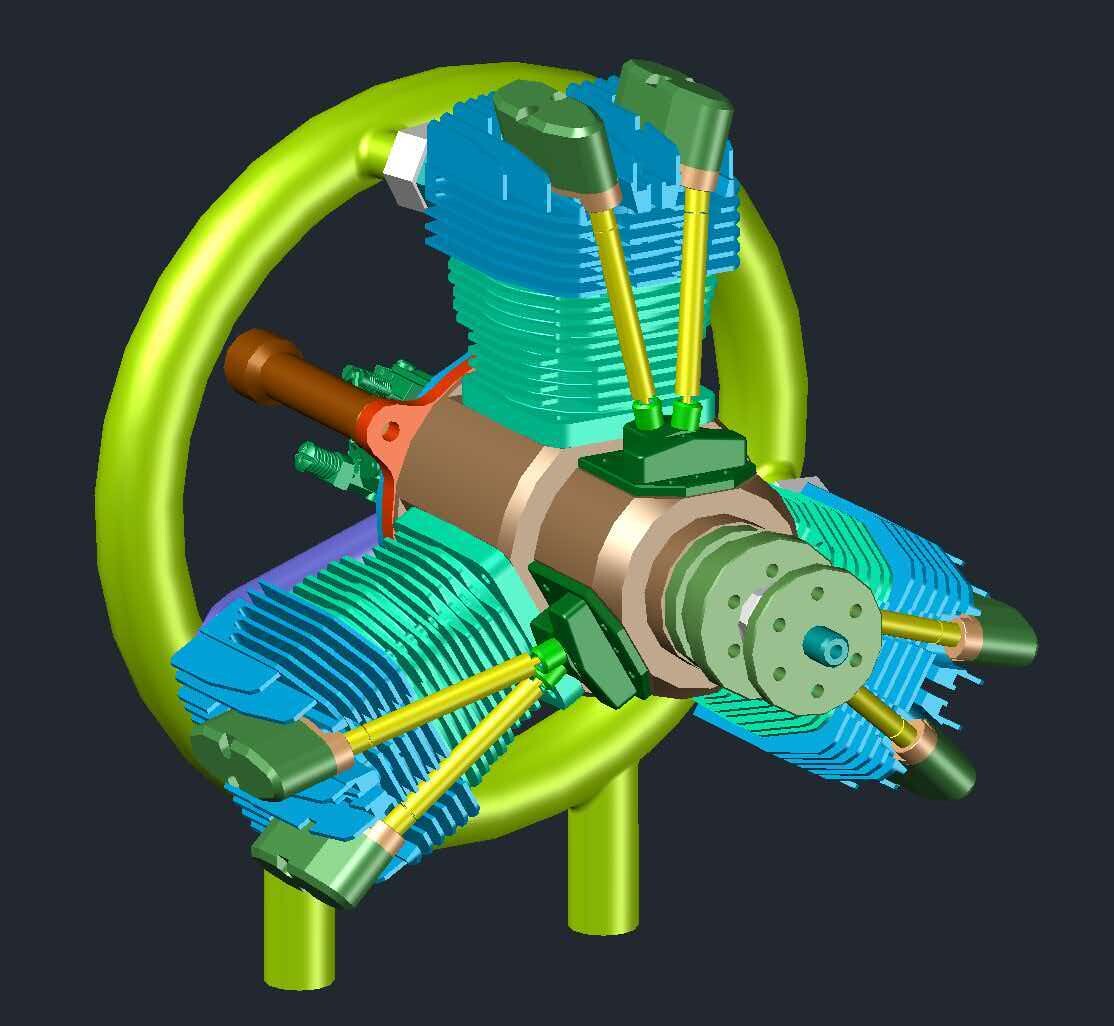
WP-S150S Three-Cylinder Radial Engine
Classic inline-three-cylinder star layout, sleek design with powerful performance, ideal for high-end RC model aircraft.
Technical Specifications
Product Overview
The WP-S150S features a classic three-cylinder radial layout, perfectly replicating the appearance and sound of real aircraft engines. With powerful performance and smooth operation, it's the ideal choice for high-end flight simulators and collectible models.
Top 10 Engine Features
Ceramic-coated cylinder
Features a low-pressure cast ceramic-coated cylinder bore with high-precision honing for superior air tightness and wear resistance.
Forged aluminum piston
High-strength forged aluminum alloy piston with ultra-lightweight CNC machining for superior strength and high-speed performance.
Needle roller bearing connecting rod
High-strength forged aluminum alloy needle connecting rod: stronger, more durable, and smoother operation.
High-performance valve
Non-magnetic high-temperature valve: durable and airtight.
Forged one-piece crankshaft
High-precision forged one-piece crankshaft: longer lifespan and smoother rotation.
Powder Metallurgy Rocker Arm
Powder metallurgy camshaft rocker arm: low wear, extended maintenance and adjustment intervals.
OHV valvetrain
Low-drag, high-strength overhead camshaft valvetrain delivers higher performance with reduced operating resistance.
Flexible intake structure
The flexible intake structure eliminates the risk of manifold fractures common in competing products.
Imported carburetor
High-precision imported Japanese Walbro carburetor: versatile, tolerant, and easy to adjust.
Rear exhaust system
Purpose-built rear exhaust system for smooth flow, compact design, and excellent sound performance.
Safety Precautions
Safety First! Please follow these safety guidelines.
- 1Hand-cranking the engine is not recommended under any circumstances.
- 2Do not stand in front of or beside the engine after it starts.
- 3Secure the engine firmly by tightening the mounting bracket and screws. For final installation and flight, apply removable thread-locking adhesive to the bracket screws for added security.
- 4Do not touch a running engine with your hands.
- 5The engine contains various small metal parts. Keep out of reach of children under 14 years of age to prevent accidental ingestion.
- 6When using engine oil, observe fire safety precautions.
Engine Break-in and Adjustment
- 1We recommend using fully synthetic FD-grade 2-stroke oil (e.g., Motul 710, Motul 800). Mix ratio: 30:1 to 35:1 (example: add 33 mL of oil per liter of gasoline for a 30:1 mix).
- 2We recommend breaking in the engine with a 20×8 birch propeller. Securely mount the engine to a test stand or aircraft, start it with a starter, and run at a medium speed of 3500-4500 RPM for 20-30 minutes to prepare it for flight.
- 3Pre-flight Ground Check: Ensure fuel lines are clear; fuel must flow freely from the tank to the carburetor. Verify electrical system integrity: confirm battery connectors are secure, and manually rotate the propeller to check for a normal spark at the CDI cap when the hub magnet passes the Hall sensor. Ensure proper air intake: the intake bellmouth must be free of obstructions.
- 4Standard OEM carburetor needle settings: L = 1.3-1.5 turns, H = 1.5-1.7 turns (count the number of turns from fully tightened clockwise to fully loosened counterclockwise; the needle closer to the intake trumpet is the H needle).
- 5After startup, gradually increase throttle to mid-speed at 3000-4000 RPM and hold for about 1 minutes to warm up the engine.
- 6High-speed tuning: Gradually increase throttle and observe acceleration smoothness. If the engine stalls or hesitates, turn the H needle counterclockwise to open it. Push throttle to maximum (recommended max RPM for 20×8 maple A-type propeller: 7000-7200). Then, slowly turn the H needle clockwise to reach peak RPM, followed by turning it counterclockwise 10-15 degrees to lean out slightly.
- 7Low-speed adjustment: Recommended idle speed is 1750-1850 RPM. If the idle is unstable, tighten the low-speed (L) needle slightly clockwise and loosen the idle screw counterclockwise. If acceleration is sluggish or the engine stalls, loosen the L needle counterclockwise and tighten the idle screw clockwise. If the engine does not return to idle promptly when throttling back at high speeds, slightly loosen the high-speed (H) needle counterclockwise and repeat adjustments.
- 8After each needle adjustment, run the engine at high speed for 10-15 seconds to stabilize before evaluating the results. Do not adjust again immediately after only idling for a few seconds.
- 9Final tuning results: stable idle, clear acceleration, steady high-speed performance, and rapid return to stable idle from high speed.
Maintenance and Repair
- 1The WP Series S50 engine valve clearance maintenance interval is 10 flight hours. Intake valve clearance shall not exceed 0.1 (recommended: 0.06); exhaust valve clearance shall not exceed 0.1 (recommended: 0.08).
- 2Install the waste oil hose correctly to ensure smooth drainage. The hose length must not exceed 15 cm, and its inner diameter must be at least 3 mm.
- 3The WP Series S50 engine is eligible for factory return maintenance and repair. Please contact the manufacturer's customer service immediately if you encounter any issues.
Product Photos
Learn more
Our technical team can provide detailed product selection recommendations and technical support.